
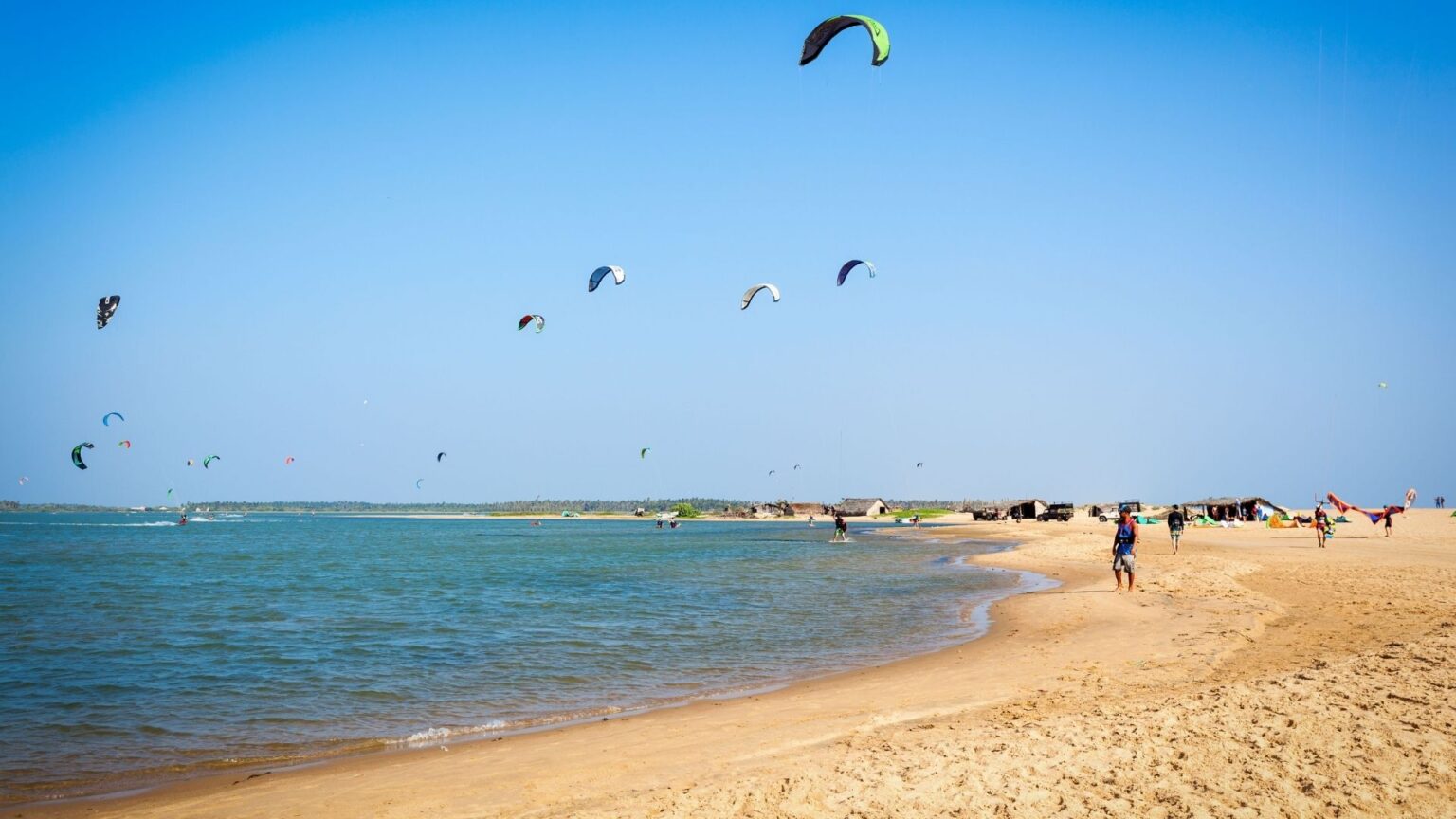
Kalpitiya is a small peninsula on the northwest coast of Sri Lanka. Just a few years ago, it was a quiet fishing village. Today, it is one of the top kitesurfing destinations in Asia. It offers strong winds, huge flat water lagoons, and warm weather all year. A long sandbar separates the calm lagoon from the rough Indian Ocean. This creates a safe playground for beginners and a flat water heaven for advanced riders. The local culture is friendly. You will eat fresh seafood and local curries after a long day. Kalpitiya lacks giant luxury hotels. It feels natural. You will find sandy roads and rustic kite camps. If you plan a kitesurfing trip, this guide covers everything you need to know.
Understanding the Wind Seasons
The wind here is very reliable. The area has two different wind seasons. You need to pick the right time based on your style and skill level. Summer brings heavy wind, while winter brings lighter breezes. Knowing the difference is the secret to a perfect trip. You do not want to bring the wrong kite sizes and sit on the beach watching everyone else ride.
Summer Season: May to October
This is the main kitesurfing season. The southwest monsoon hits the coast and brings serious wind. From May until October, it blows almost 24 hours a day. It is strong and consistent. July and August are peak months. During this time, expect winds between 20 and 30 knots almost every day. This season is perfect for advanced riders who want to jump high. You will need smaller kites, usually between 7m and 9m. The main lagoon stays flat, but the wind can be punchy. If you want long downwind trips, summer is the time to go. The kite camps are busy and full of energy. The sky is packed with kites. You will meet riders from all over the world. It is an action-packed season. You will sleep very well each night.
Winter Season: December to March
Winter offers a different vibe. From mid-December to mid-March, the wind comes from the northwest. It is a thermal wind. The mornings are calm and quiet. The wind builds around noon and peaks in the late afternoon. Expect steady winds between 14 and 18 knots. Winter is the best time for beginners. The wind is smooth and predictable. You need bigger kites, usually between 12m and 14m. The calm mornings give you time to go dolphin watching or take a boat ride. The sunsets over the flat water are amazing. The vibe in the kite camps is much slower and more relaxed during the winter. You can take your time waking up. You eat breakfast slowly before heading out for an afternoon session.
Transition Months
April and November are transition months. The wind becomes very unpredictable. Sometimes you score a great session. Other times, the wind dies completely for days. November also brings rain. The wind might switch directions in the middle of a session. If you plan a dedicated kite trip, avoid April and November. You might end up frustrated. Stick to the peak summer or winter months for guaranteed wind.
The Best Kitesurfing Spots
Kalpitiya is a massive area with many riding spots. You have lagoons, river mouths, and small offshore islands. Every spot has a different feel. You can ride a new location almost every single day.
Kalpitiya Lagoon
This is the main hub. The lagoon is about two kilometers long and nearly a kilometer wide. A strip of sand separates it from the ocean. The water is mostly flat, with small chop in the middle. It is waist-deep almost everywhere. This makes it incredibly safe. If you drop your kite, you just stand up in the sand. Almost all schools teach their lessons here. There is a designated teaching zone so beginners stay safe. Because it is huge, it rarely feels crowded. You have space to practice water starts or new tricks. There are no dangerous rocks or hidden reefs under the water. The bottom is soft sand and mud. It is the perfect place to build your confidence on the board.
Vella Island
Vella Island is a world-class spot. It is located 25 kilometers north of the main lagoon. You take a 45-minute boat ride to get there. Vella is a long, curved sandbank in the ocean. The wind blows offshore over the sandbank. This creates water that is smooth like glass. The wind is stronger here due to a funnel effect. Vella is best during summer. You must be able to ride upwind to kite here safely. Kite camps organize day trips, loading gear onto boats in the morning and returning before sunset. You kite downwind along the coast to get there. It is a long journey, but the butter-flat water is completely worth the effort.
Kappalady Lagoon
Kappalady Lagoon is 30 minutes south of the main town. It is smaller than the main lagoon but very beautiful. The water is extremely flat and clean. Because it is small, it has a strict limit on how many kiters can fit on the water. This keeps it safe and fun. It is much quieter than Kalpitiya. It is a great place for escaping the crowds and focusing entirely on your riding technique.
Donkey Point
If you prefer waves, Donkey Point is the place. It is located on the ocean side of the peninsula. During summer, the wind hits it perfectly. You get clean wind and actual ocean waves. It is a great spot to ride a directional surfboard instead of a twin-tip. The water is deep and the conditions are wilder here. Camps often keep rescue boats nearby for safety.
What to Wear and Pack
The water stays between 27 and 30 degrees Celsius all year. You do not need a wetsuit. You can ride in just boardshorts or a swimsuit. However, the tropical sun is very strong. The water reflects the light and makes it worse. Pack a long-sleeve rashguard to save your back from sunburn. A surf hat with a chin strap keeps the sun out of your eyes. Bring lots of waterproof sunscreen and apply it heavily. A good pair of polarized sunglasses will help cut the glare. Make sure your sunglasses have a floaty strap. If you crash and they fall off, you want them to float on the surface so you can find them.
No Wind Activities
When the wind takes a break, you have options. In winter, take a boat trip to see dolphins. They swim off the coast in huge pods. The calm morning ocean makes them easy to spot. You can also visit Wilpattu National Park. It is the largest park in Sri Lanka. Book a 4×4 safari and drive the rugged dirt trails through the jungle. It is perfect for off-road fans. You might see leopards, elephants, and sloth bears. Taking a rugged 4×4 through the thick trees is an adventure on its own. You can also rent paddleboards to explore the quiet mangrove forests. The local village is also fun to walk through to see daily life.
How to Get There
Kalpitiya is very accessible. Most visitors fly into the main airport near Colombo. The drive north takes three to four hours. The easiest way is to hire a private van. This is helpful if you carry bulky kite bags. Your camp can easily arrange a driver. You can also take a local bus for a cheaper option. Once in Kalpitiya, getting around is simple. Rent a bicycle to ride down sandy roads to the beach. Many visitors rent scooters for longer trips. Tuk-tuks are also everywhere for quick town trips. You can easily fit two people and a couple of kites in the back of a large tuk-tuk. The local drivers know exactly where all the best kite spots are located. They are always happy to help you load and unload your heavy bags.
Final Thoughts
Kalpitiya is a true kitesurfing paradise. The wind is powerful, the water is flat, and the weather is warm. You never have to worry about cold water. Whether you are learning your first water start or landing big jumps, this place delivers. Pick the season that fits your skill level, pack your sun protection, and enjoy the water. Kalpitiya is waiting to show you an unforgettable kitesurfing holiday. Book your ticket and get ready to fly.